
Acne, Dark Spots and Red Marks: What's the Difference and How to Treat Each
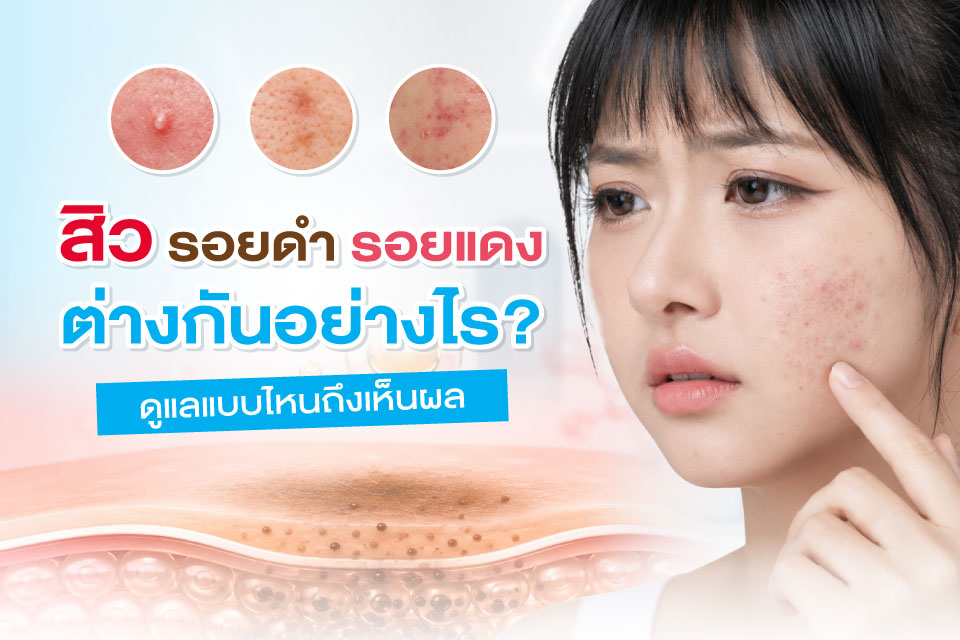
Many people are all too familiar with this frustrating cycle: a pimple swells up, leaves a red mark behind, and then suddenly turns into a dark spot embedded in the face for months on end. Acne and acne marks are a natural problem that can affect anyone, of any gender or age, whatever your skin type. But to tackle the problem decisively and effectively, we first need to understand that acne, red marks, and dark spots have completely different origins and mechanisms.
Using the wrong type of product not only fails to fade the marks, it can also waste both time and money. This article takes a deep dive into the differences between these three problems, along with targeted skincare advice to help your skin become smooth and radiant once again.

The First Stage of the Problem: "Acne"
Acne is where the whole frustrating cycle begins. It arises from clogged pores, driven mainly by excess oil, dead skin cells, and bacteria. Once a pore becomes blocked, the skin in that area starts to swell and redden, eventually turning into inflamed acne.
How to Care for Skin with "Acne"
The main goals at this stage are to reduce oiliness, reduce clogging, and kill bacteria — without being harsh on the skin.
- Use a gentle cleanser: Choose a facial cleanser that does not leave the skin dry and tight, to preserve the balance of the skin barrier.
- Exfoliate with BHA: These ingredients dissolve well in oil, so they penetrate deep into clogged pores to clean them thoroughly.
- Spot-treat the right way: Use an acne spot treatment containing benzoyl peroxide or tea tree oil to reduce inflammation, and never squeeze or pick at pimples — that is precisely what causes the red and dark marks in the next stages.

The Scars of Battle: "Post-Acne Red Marks" (PIE)
When inflamed acne subsides, what it often leaves behind is a "red mark." This type of mark is not caused by pigment but by the dilation of tiny capillaries beneath the skin. Because of severe inflammation — or squeezing the pimple — the body sends extra blood to the area to repair the damaged tissue.
How to Care for Skin with "Red Marks"
Because red marks involve blood vessels and inflammation, ordinary whitening products have almost no effect. The goal at this stage is to soothe the skin and reduce inflammation.
- Focus on soothing ingredients: Look for skincare containing Centella asiatica extract, niacinamide (vitamin B3), aloe vera, or panthenol (vitamin B5), which help reduce blood vessel dilation and restore injured skin.
- Protect the skin barrier: Use a moisturizer containing ceramides to make the skin stronger.
- Medical treatment: For faster results, vascular-targeting lasers deliver the most precise and rapid improvement for red marks.

The Deep-Seated Problem That Is Hardest to Treat: "Post-Acne Dark Spots" (PIH)
If red marks are not properly cared for, or if skin that recently had acne is exposed to sunlight, the body produces abnormally large amounts of melanin pigment to protect that area. As a result, the red mark turns into a deep-looking, dark brown "dark spot" — the kind of mark that takes the longest of all to treat.
How to Care for Skin with "Dark Spots"
The goal at this stage is to inhibit pigment production and shed old skin cells.
- Use whitening ingredients: Choose products containing vitamin C, arbutin, kojic acid, or tranexamic acid, which inhibit the enzyme responsible for producing melanin.
- Exfoliate the surface with AHA: Lactic acid or glycolic acid helps speed up the shedding of dead skin cells, making dark spots fade more quickly.
- Sunscreen is non-negotiable: This is the golden rule! If you apply dark-spot creams but skip sunscreen, ultraviolet rays will make the spots even darker than before. Apply a high-protection sunscreen every single day.
- Medical treatment: Pigment-targeting lasers such as Q-switched or pico lasers, or IPL treatments, can help shatter melanin pigment so it breaks down and fades faster.

Holistic Skincare Tips
Whatever your gender, keeping skin free of acne and acne marks rests on the same fundamentals: consistency and gentleness. Always remember — never pick and never squeeze. Squeezing pimples yourself risks infection and pushes the inflammation deeper into the skin. You should also adjust your lifestyle by cutting back on sugar and cow's milk, both of which help stimulate the hormones that trigger acne, and by getting enough rest. Most importantly, give your skin time: the skin's natural cell-renewal cycle takes time, so products for treating acne marks require patient, continuous application before you begin to see clear changes.

Restore Radiant, Mark-Free Skin at Issavee Clinic
Understanding your skin problems correctly is the key to choosing skincare products effectively. But if you have tried many approaches and your acne marks still will not fade — or you want a method that delivers fast, safe results — Issavee Clinic is ready to care for you with a team of skin specialists who will analyze your skin and accurately classify your problem, whether it is clogged pores, vascular red marks, or pigment-based dark spots. They will design a personalized treatment program using innovative lasers and modern treatments that are gentle on every skin type, helping you reclaim smooth, radiant skin and carry your confidence at one hundred percent once again.